
In this guide
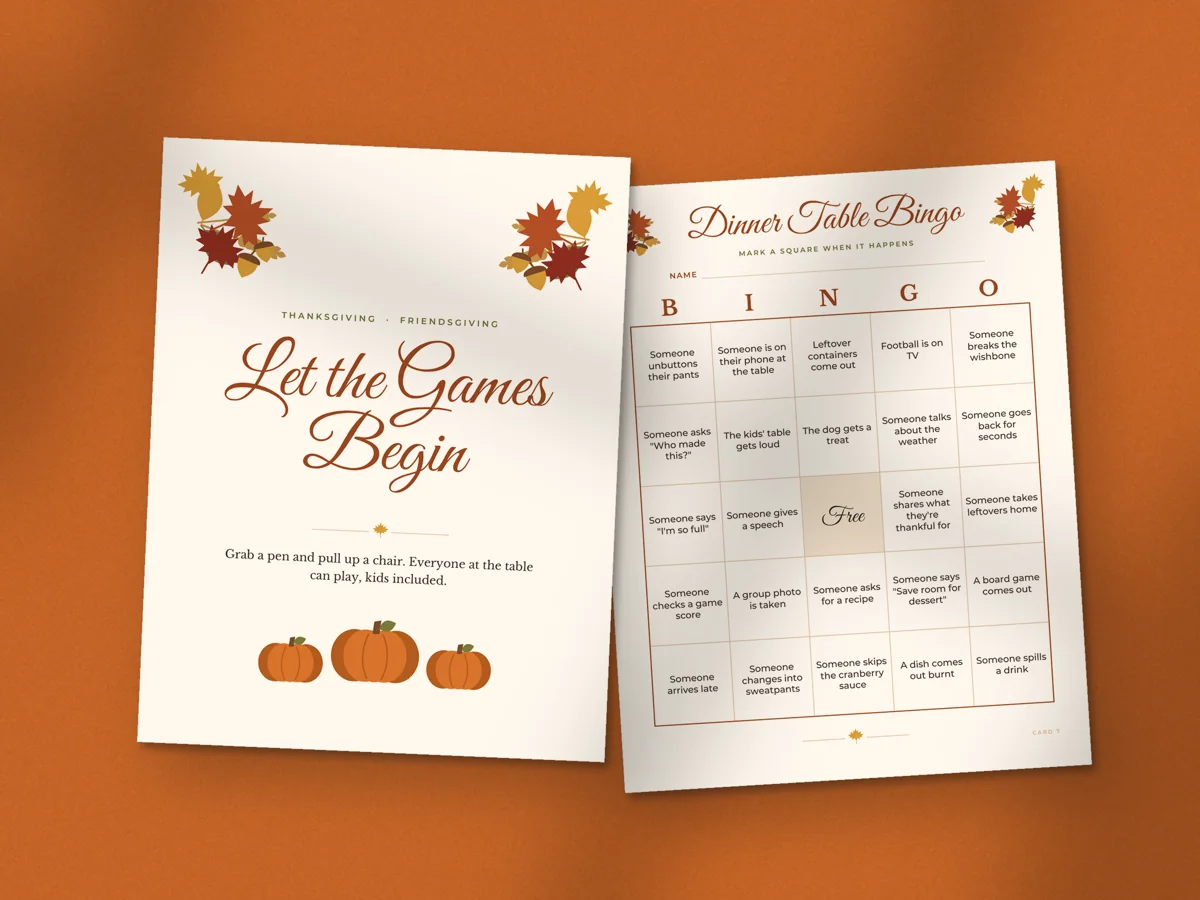
- Dinner table bingo
- Guess who's thankful
- Who's most likely to
- Would you rather
- Thanksgiving trivia in teams
- Conversation cards at every plate
- Thankful cards read aloud
- Gratitude dice
- Best dish awards
- Thanksgiving charades
- A kids table that plays itself
- How to plan Friendsgiving games and activities for the evening
- Friendsgiving games and activities for big groups
The best Friendsgiving games and activities are the ones people can play from their seats with a plate in front of them: bingo that runs all evening, a round of trivia between dinner and pie, a stack of question cards on the table. Pick one game for when guests arrive, one or two for the table and one for after dinner. Paper, pens and a die cover almost everything below.
Each idea says who it suits and how long it runs, so you can match it to your crowd, whether that's six adults or twenty people with kids.
1Dinner table bingo
- Good foreveryone, any group size
- Timethe whole evening
Hand out bingo cards at the door. Instead of numbers, the squares are things that happen during the party: the gravy runs out, someone arrives late, a dish nobody has seen before shows up, someone takes leftovers home. Guests mark a square when it happens, and the first full row, column or diagonal wins.
It works well at Friendsgiving because nobody has to stop eating or talking to play. Keep a small prize by the pie, and make sure every card is different, or three people will shout BINGO at the same moment.
2Guess who's thankful
- Good foradults, friends who know each other well
- Time15 to 20 minutes
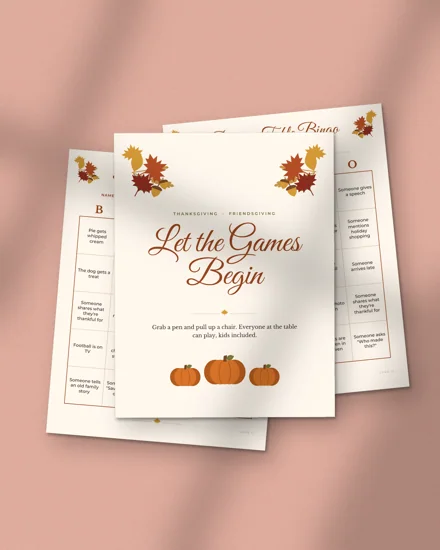
Before dinner, each guest writes one thing they're thankful for on a slip of paper, folds it and drops it in a bowl. Nobody signs their slip. During dessert, the host reads them out one at a time, and the table guesses who wrote each one.
The best answers are specific ("the neighbor who shovels my driveway") rather than general ("family"). Say so when you hand out the slips, and the guessing gets much more fun.
3Who's most likely to
- Good foradults and teens, groups that know each other
- Time10 to 20 minutes
Give everyone a sheet of prompts: who's most likely to call store-bought pie homemade, fall asleep first after dinner, or bring a dish that needs the oven at the last minute. Each guest writes a name next to every prompt. Then read the prompts out and compare answers.
Keep the prompts affectionate. The game works because everyone gets named a few times, so nobody feels singled out.
4Would you rather
- Good formixed tables, people who've just met
- Timeas long as you like
Read out a choice with two sides, such as pumpkin pie or apple pie, host the dinner or be a guest, and everyone picks one and says why. There's no score and nobody loses. That makes it a safe opener for a Friendsgiving where some guests only know the host.
For a quieter version, print the questions on a sheet, let people circle their picks during the meal and compare at the end.
5Thanksgiving trivia in teams
- Good foradults, teens, groups of 8 or more
- Time20 to 40 minutes
Split the room into teams of three to five and give each team one answer sheet. Read the questions aloud: the 1621 harvest feast, turkeys, how the holiday became a national one. Multiple choice keeps it fair for guests who didn't grow up with the holiday, which at Friendsgiving is often a few people.
Swap sheets between teams for marking, and keep one tiebreaker question ready where the closest number wins.
6Conversation cards at every plate
- Good forlong tables, quiet groups, mixed ages
- Timeall through dinner
Put two or three question cards at each place setting before guests sit down. "What's the funniest thing that happened at a holiday dinner?" or "If you could master one recipe, what would it be?" gives people something to say beyond "pass the stuffing." Guests read theirs out when there's a lull, or pass them along.
There's nothing to win, so it suits a table where some people are shy about games.
7Thankful cards read aloud
- Good foreveryone, including kids
- Time10 to 15 minutes
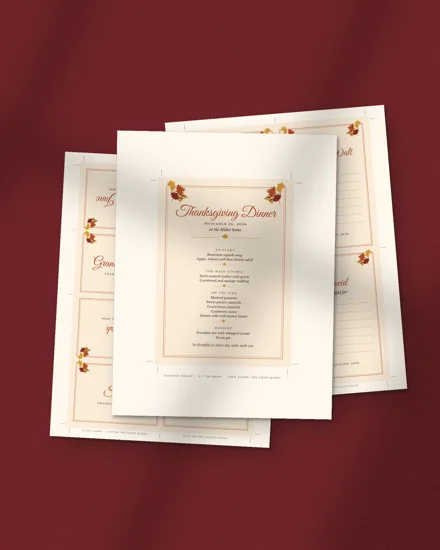
Leave a small card at each seat that starts with the guest's name: "Sam is thankful for", with a few lines to fill in. Guests write theirs before the meal. Between dinner and dessert, go around the table and read them out.
Printing names on the cards gets everyone to write something, since a blank card is easy to skip. Our Thanksgiving menu and place card set makes a thankful card for each guest from your guest list, along with the place cards and the menu.
8Gratitude dice
- Good forfamilies, small tables
- Time10 to 20 minutes
Write six prompts on a sheet, one for each number on a die: a food you're thankful for, a person who helped you this year, a small thing that made you happy. Pass the die around the table, and each person rolls and answers the prompt for their number. Play a second round with six new prompts if the table wants more.
The die takes the pressure off. Nobody has to come up with a speech; they just answer one small question.
9Best dish awards
- Good forpotluck Friendsgivings
- Time5 minutes to vote, 5 to announce
If every guest brings a dish, give each one a small paper ballot during dessert. Try four categories: the best side, the best dessert, the most surprising dish and the best dish that took under ten minutes. People vote for anything except their own. The host counts and announces the winners before everyone packs up the leftovers.
Guests end up talking about each other's cooking, which is half the point of a potluck.
10Thanksgiving charades
- Good foradults, large groups, after dinner
- Time20 to 30 minutes
Write Thanksgiving words and phrases on slips: carving the turkey, food coma, the kids table, a parade balloon, the last slice of pie. Split into two teams. One player acts out a slip without speaking while their team guesses, with one minute per turn. Charades gets people up from the table, which helps after a big meal.
For a group that doesn't like acting, draw the word on a sheet of paper instead.
11A kids table that plays itself
- Good forkids from about 4 to 10
- Timedinner and the wait before it
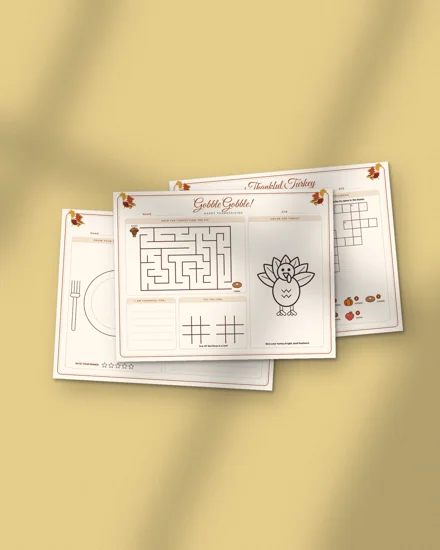
When families bring kids, give the kids table its own activities, so the adults can finish a conversation. Activity placemats with a maze, a word search and a turkey to color keep them busy at their seats. A drawing game with one die, where each roll adds a part to a turkey, works for two kids at a time.
Our Thanksgiving kids placemats have eight of these pages with place cards for the kids table.
How to plan Friendsgiving games and activities for the evening
Plan where each game goes in the evening so that the games don't take over the party:
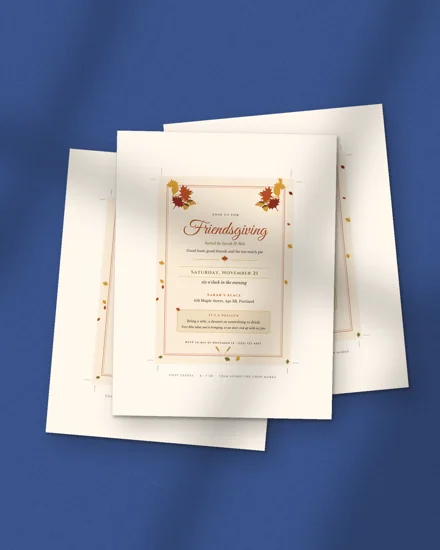
- On the invitation. Mention there will be games, and if it's a potluck, tell people what to bring, so you don't get five pies and no sides. Our editable Friendsgiving invitation has a potluck box for exactly that.
- At the door. Hand out bingo cards and the thankful slips. Both run in the background while people talk.
- At the table. Conversation cards and thankful cards. Keep games that need rules for later, when the plates are cleared.
- Between dinner and pie. Trivia, Who's most likely to, or reading the thankful slips. This is the best slot for one bigger game.
- After dessert. Charades or best dish awards for the people who stay late.
Two or three games are enough for one evening. Pick them before the party and print everything the day before.
Friendsgiving games and activities for big groups
With 15 or more guests, pick games that everyone plays at once rather than in turns. Bingo, trivia in teams, Who's most likely to and best dish awards all work at that size, because people play on their own sheet or in a team. Charades works in two teams. Games where each person answers in turn, like gratitude dice, are better split up by table.
Our Thanksgiving and Friendsgiving games bundle has ten of the games above on 31 pages, including 16 different bingo cards. For more than 16 players, print a second set. For tips on printing game sheets and card stock at home, see how to print printables.
Questions and answers
What do you do at a Friendsgiving?
Most Friendsgivings are a shared dinner, often a potluck where each guest brings a dish. Beyond the meal, hosts usually add one or two games or a gratitude activity, like thankful cards read at the table or a round of trivia before dessert.
What are good Friendsgiving games for adults?
Who's most likely to, guess who's thankful, trivia in teams and charades suit adults best. They work well with friends who know each other and get people talking. Dinner table bingo runs all evening and needs no explaining.
What are some Friendsgiving games that include kids?
Games with a lot of reading are hard for younger kids, so give them activity placemats with mazes and coloring. Would you rather, gratitude dice and dinner table bingo work for kids and adults at the same table.
How many games should you plan for a Friendsgiving?
Two or three is plenty for one evening: one that runs in the background, like bingo, and one or two short games between dinner and dessert. Much more than that and the games crowd out the conversation.
What Friendsgiving activities aren't games?
Conversation cards at each plate and thankful cards read aloud have no winner at all. Best dish awards are a light vote on the food. All three suit groups that don't like competing.