
In this guide
- Do potty training sticker charts work?
- Wait for the signs of readiness
- Make or print the potty training sticker chart
- Decide what earns a sticker
- Pick rewards together
- Offer the potty at regular times
- Track what happens for the first week
- Handle accidents without fuss
- Using a potty training sticker chart with a visual routine
- What to do at night: a separate dry night sticker chart
- When your child loses interest in the potty sticker chart
To use a potty training sticker chart, hang it by the potty, let your child add a sticker every time they sit and try, and trade a set number of stickers for a small prize you agreed on together. Give stickers for trying at first, not only for success, keep potty times regular, and never take a sticker away after an accident.
The rest of this guide covers the parts that decide whether it works: when to start, what exactly earns a sticker, how to pick rewards, and what to do when your toddler stops caring about stickers after a week.
Do potty training sticker charts work?
A sticker chart works for many toddlers because it turns an invisible skill into something they can see and count. Each sticker is proof they did it, and a filling chart shows progress a two-year-old can understand without words.
A chart helps a child who is already ready to learn. It won't make a child ready, and it can't fix constipation or fear of the toilet. If potty time hurts, your child holds in poos for days, or a child who was dry for months starts having accidents again, talk to your pediatrician before pushing on with the chart.
1Wait for the signs of readiness
There's no set age for potty training. Signs of readiness tell you more than a birthday does, and most children show several of them before they're ready to start:
- stays dry for 1 to 2 hours at a time, or wakes up dry from some naps
- tells you or shows you when the diaper is wet or dirty
- hides or goes quiet to do a poo
- is curious when others use the toilet
- can pull pants up and down with a little help
- can follow simple two-step directions and sit still for a few minutes
Pick a start date with no big changes around it. A new sibling, a move or a new daycare is a hard week to learn anything new.
- Good fordeciding when to start ·
- Timea week or two of watching
2Make or print the potty training sticker chart
To make a potty training sticker chart yourself, draw a grid of 20 to 30 squares or circles on paper, write your child's name at the top, and mark a small prize at a few points along the way. Let your child decorate it; kids tend to care more about a chart they helped make.
Keep the chart where the potty is. Tape it to the bathroom wall at your child's eye level, with the stickers on a shelf next to it, so the sticker comes right after the try. Also have ready: a potty or a toilet seat with a step stool, easy pull-up pants, plenty of underwear, spare outfits and wipes.
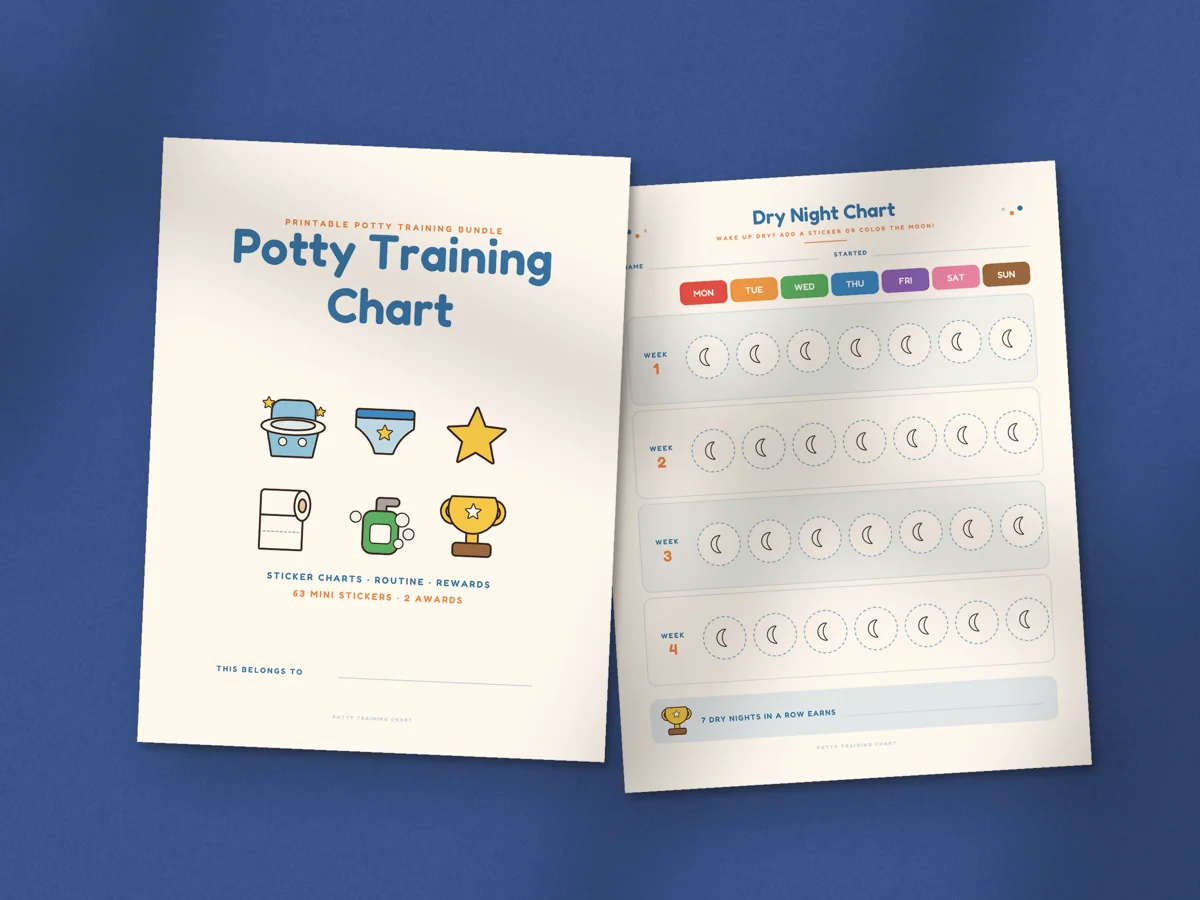
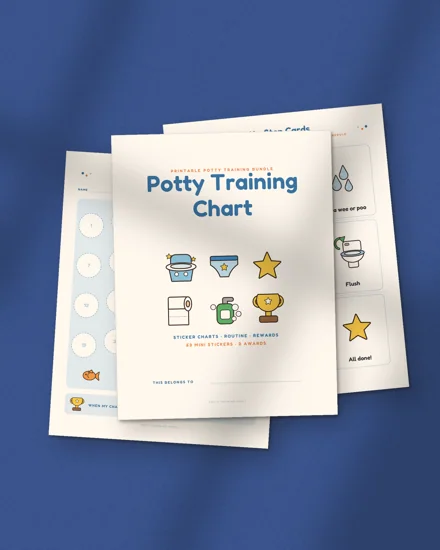
If you'd rather print one, our potty training chart set has six sticker charts to choose from (30 stars, a 23-step path to a prize, 24 bubbles under the sea, 24 hearts, a weekly chart and a four-week dry night chart), 63 mini stickers sized to fit them, and a readiness checklist. For printer settings and sticker paper, see how to print printables at home.
3Decide what earns a sticker
What earns a sticker should change as your child learns. A simple plan in three stages:
- First days: a sticker for sitting on the potty and trying, even if nothing happens.
- Once they're going in the potty sometimes: a sticker for each wee or poo in the potty.
- Once most tries work: a sticker for dry pants all morning, or all day.
Some families give two stickers for a poo, since that's often the harder one. Whatever you choose, say the rule out loud in few words ("You sat on the potty, you get a sticker!") and keep it the same every time.
4Pick rewards together
A potty reward chart works best with small prizes at short steps. A toddler can't wait 30 stickers for anything, so put the first reward close.
Potty training reward chart ideas by milestone:
- 5 stickers: pick the bedtime story, a silly dance party, a fun sticker.
- 10 stickers: bubbles in the garden, choose what's for dinner, a trip to the playground.
- 20 stickers: new big-kid underwear they pick themselves, baking a treat together.
- 30 stickers: a special day out, a video call to grandma to share the news.
Choose them together and write them down or draw them, so the prize isn't a surprise and doesn't grow each time. Time together and small choices cost nothing and don't pile up in the toy box.
5Offer the potty at regular times
How often should you try when potty training? Offer the potty at set points in the day instead of asking every few minutes. Good times are right after waking up, after meals, before going out, after a nap, before the bath and before bed.
A weekly potty chart with those times down the side shows at a glance which ones work. If your child says no, try again at the next time on the list. A kitchen timer or a song can make "potty time" a signal instead of a request.
6Track what happens for the first week
A few days of notes show you your child's pattern, which is the fastest way to fewer accidents. Write down the time of each try, whether there was a wee or a poo, any accidents, and roughly when your child drank something.
After three or four days you'll usually see it: a wee about half an hour after breakfast, a poo after lunch. Then you can time potty tries to match. A plain notebook works fine for this; our chart set includes a log page with columns for exactly these things.
7Handle accidents without fuss
Accidents are part of learning to use the potty, and the chart should stay a happy thing. When one happens, clean up calmly, say something short like "Wee goes in the potty, let's try next time," and move on.
Never take a sticker off the chart. The chart shows what your child has done well, and removing stickers turns it into a punishment board. If accidents pile up for more than a week or two, go back a stage: give stickers for trying again, and offer the potty more often.
Using a potty training sticker chart with a visual routine
Many toddlers get stuck on the steps around the wee itself: pants down, wipe, flush, wash hands. A row of pictures by the potty shows the order so you don't have to repeat it every time.
Our potty chart set has an eight-step picture routine (pants down, sit on the potty, do a wee or poo, wipe, pants up, flush, wash my hands, dry my hands) and nine cut-out cards with the same steps. If you want to use the same approach for mornings and bedtime too, see how to use a visual schedule and our visual schedule printable.
What to do at night: a separate dry night sticker chart
Many children stay dry in the day long before they stay dry at night, often by months. Keep a pull-up or diaper at night until your child wakes up dry now and then.
When dry mornings start to show up, a separate night chart with a sticker for each dry morning can help. Keep it separate from the day chart, so a wet night doesn't feel like a failure on the chart your child is proud of.
When your child loses interest in the potty sticker chart
Most sticker charts lose their shine after a week or two. That's normal, and it usually means the chart has done its job of getting started. A few ways to bring it back:
- Swap to a new design, like hearts instead of stars or a path to a prize.
- Move the reward closer: if the next prize is 20 stickers away, add one at five.
- Let your child choose the sticker, where it goes and the next prize.
If your child is using the potty most of the time, let the chart fade. Finish the current one, give an award, and stop there.
Questions and answers
How do you use a potty training sticker chart?
Hang it by the potty and give your child a sticker right after each try, starting with stickers for sitting and trying. Agree on small prizes at 5, 10 and 20 stickers, and never take stickers away after accidents.
How do you make a sticker chart for potty training?
Draw a grid of 20 to 30 boxes on paper, add your child's name, and mark small prizes at a few points. Let your child decorate it and tape it at their eye level near the potty.
Do potty training sticker charts work?
They help many toddlers who are already showing signs of readiness, because each sticker makes progress visible. They don't replace readiness, and pain or long constipation is a question for a pediatrician, not a chart.
What should the rewards be?
Small and quick at first: choosing the bedtime story, bubbles outside, a trip to the playground. Save bigger rewards like new underwear or a day out for later milestones.
Should I give a sticker for trying or only for success?
Start with a sticker for every try. Once your child is going in the potty some of the time, switch to stickers for each success, then for dry stretches.
When should I stop using the sticker chart?
When your child uses the potty most of the time without reminders. Finish the chart they're on, celebrate with a small award, and let it go.