
In this guide
- At what age should a child start doing chores?
- Chores for kids ages 2 to 3
- Chores for kids ages 4 to 5
- Chores for kids ages 6 to 8
- Chores for kids ages 9 to 12
- Chores for teens (ages 13 and up)
- How many chores should a child have?
- How to set up a chore chart that works
- Chore chart ideas for multiple kids
- Chore chart rewards that work
- Chore chart ideas with money
- Using a chore chart with a daily routine
Chores for kids by age start small: a two-year-old can put toys in a box and clothes in the hamper, a five-year-old can make the bed and set the table, and by nine or ten most kids can load the dishwasher, take out the trash and vacuum a room. Teenagers can do their own laundry, clean a bathroom and cook a simple meal. Pick two to four jobs that fit your child today, put them on a chart, and add harder ones as they get good at the easy ones.
These lists of chores for kids by age are starting points. Children of the same age differ a lot, so use them as a menu and go by what your child can already do. After the lists you'll find how many chores to give, how to set up the chart, and which rewards keep it going.
At what age should a child start doing chores?
Most children can start helping at around two, as soon as they can walk across a room carrying something. At that age a chore is a game: "Can you put the blocks back in the box?" The room won't end up much cleaner, but the habit of helping is easier to build at two than to start at ten.
Toddlers also love copying grown-ups. If you're wiping the table, hand them a cloth too. If you're sorting laundry, let them find the socks.
Chores for kids ages 2 to 3
Chores for toddlers should take a minute or two and have an obvious finish. Good first jobs:
- put toys in the toy box
- put books back on the shelf
- put dirty clothes in the hamper
- help feed the pet (pour the scoop you measured)
- wipe up small spills with a cloth
- help make the bed by pulling up the covers
Do the job with them at first. A toddler chart works best with pictures, since they can't read the words, and with a sticker right after the job is done.
Chores for kids ages 4 to 5
Four- and five-year-olds can do a job from start to finish once you've shown them a few times. What chores can a 5-year-old do? Try these:
- make the bed (it won't be neat, and that's fine)
- set the table and clear their own plate
- water the plants
- match socks from the clean laundry
- get the mail
- help put groceries away, starting with the unbreakable things
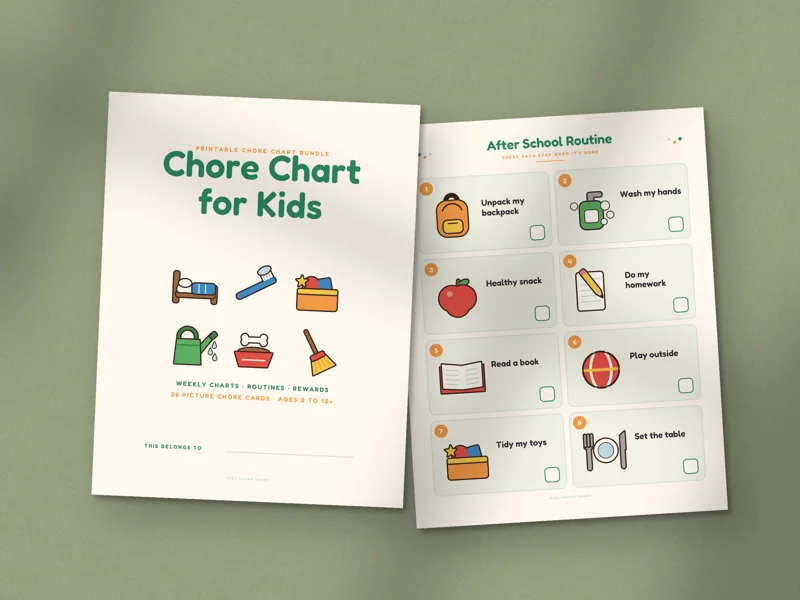
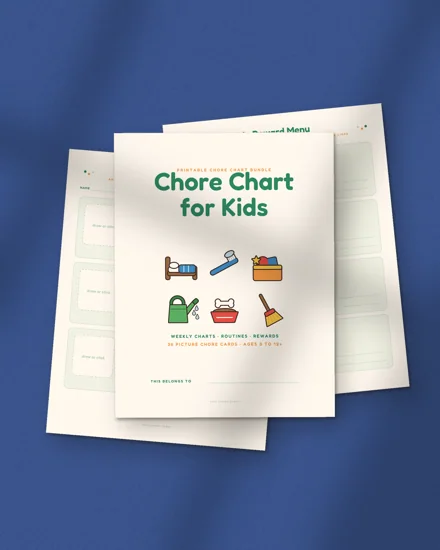
At this age, a picture chart with five to seven jobs is plenty. Our picture chore chart set has a Little Helper chart for ages 3 to 5 with seven picture chores: make the bed, get dressed, brush teeth, tidy toys, put books away, clothes in the hamper and set the table.
Chores for kids ages 6 to 8
What chores are good for a 7-year-old? Kids from six to eight can take care of their own things and do simple cleaning around the house:
- pack their school backpack the night before
- fold clean clothes and put them away
- sweep the kitchen floor
- wipe the table after meals
- dust low shelves
- feed the pet without help
This is also the age when a chart can move from stickers to coloring in a circle or ticking a box. Most kids this age can read the job names, but pictures still help them remember the whole list.
Chores for kids ages 9 to 12
What type of chores should a 10-year-old do? From nine to twelve, children can handle real household jobs that save you time:
- load or unload the dishwasher, or wash the dishes
- take out the trash and recycling
- vacuum a room
- help cook dinner (chopping soft food, stirring, reading the recipe)
- walk the dog
- rake the leaves
Kids this age often like a chart with points instead of stars, because they can add them up and see a total for the week. Points also let you make harder jobs worth more: 1 point for making the bed, 3 for cleaning the bathroom sink.
Chores for teens (ages 13 and up)
Teenagers can do most jobs an adult does, and a few years of practice before they leave home pays off. Good chores for teens:
- do their own laundry, start to finish
- clean a bathroom
- cook a simple meal for the family once a week
- wash the car
- mow the lawn, after you've shown them how to do it safely
- plan the weekly shopping list
Teens usually push back on a chart that looks like it's for little kids. A plain weekly list with points, or a family chart where everyone's jobs show, goes over better than stars and stickers.
How many chores should a child have?
There's no official number, but a few jobs done well beat a long list nobody finishes. A rough guide:
- Ages 2 to 5: two or three short jobs a day, plus "help me" moments.
- Ages 6 to 9: three or four daily jobs, such as bed, backpack, hamper and table, plus one weekly job.
- Ages 10 and up: a few daily jobs plus two or three bigger weekly ones, like vacuuming or cleaning the bathroom.
How many chores should a 7-year-old have? Three or four a day is a fair start. If your child finishes them easily for a couple of weeks, add one more. If the chart turns into a daily fight, take one off.
How to set up a chore chart that works
A chore chart works when it hangs where your child sees it every day and the jobs are short enough to finish. Five steps:
- Pick the jobs together. Let your child choose one or two from the age list. Kids stick with jobs they picked.
- Show the job, then do it together, then let them try alone. Most jobs need three or four goes before a child can do them on their own.
- Hang the chart where the jobs happen, at your child's eye level. The fridge or the back of the bedroom door both work.
- Mark each job right away. A sticker, a colored circle or a tick straight after the job ties the mark to the effort.
- Look at it together once a week. Count the stars or points, swap a job that's too easy, and pick the next reward.
Laminate the chart or slide it into a sheet protector and use a dry-erase marker, so one copy lasts for months. For printer settings, see how to print printables at home.
Chore chart ideas for multiple kids
With two or more children, one family chart on the fridge keeps things fair and in plain view. Give each child a color and write their name in it, then color each job they're responsible for.
Split the chores between the kids by age, so the older ones get the harder jobs. Rotate the jobs nobody wants, like the trash or the bathroom, every week, and write the rotation on the chart so there's nothing to argue about. Younger kids can help with an older sibling's job instead of getting one of their own. Our chore chart set has a family chart with a color code for up to five people.
Chore chart rewards that work
Small, quick rewards keep a chore chart going longer than one big prize at the end. For younger kids, put the first reward only a few stars away.
Reward ideas by milestone:
- 5 stars: pick the bedtime story, a fun sticker, 15 minutes of extra play.
- 10 stars: choose what's for dinner, a family movie night, stay up 15 minutes later.
- 20 stars: a trip to the park or library, bake a treat together, a small new book.
- 30 stars: a special day out, have a friend over, pick the next family outing.
These are the same ideas as the reward menu in our chore chart set. Time together and small choices work as well as toys and don't pile up in the house. For toddlers who are also learning the potty, see how to use a potty training sticker chart.
Chore chart ideas with money
Some families pay pocket money for chores, and some keep chores unpaid because everyone helps at home. A common middle way: daily jobs like making the bed are unpaid, and extra jobs like washing the car earn money.
If you pay, a simple save, spend and give split teaches more than the amount does. Let your child decide how much goes in each jar and write it down each week. Our chore chart set includes a money tracker with those three columns.
Using a chore chart with a daily routine
Many families pair the chore chart with a picture routine for mornings and bedtime. The chart covers jobs over the week; the routine shows the order of steps in one part of the day, like get dressed, breakfast, brush teeth, shoes on.
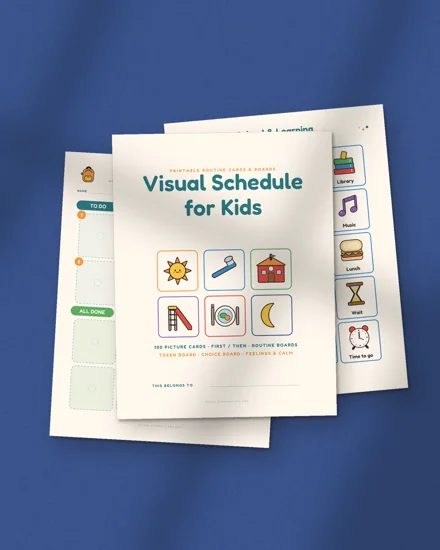
The chore chart set has morning, after-school and bedtime routines with eight picture steps each. For a bigger set of picture cards, see our visual schedule printable and the guide on how to use a visual schedule.
Questions and answers
What chores can a 5-year-old do?
A 5-year-old can make their bed, set the table, clear their own plate, water plants, match socks and put unbreakable groceries away. Show them a few times first, then let them do it alone, even if the result isn't perfect.
What are good chores for an 8-year-old?
Packing the school backpack, folding and putting away clothes, sweeping, wiping the table, dusting low shelves and feeding the pet. Three or four a day is enough.
What chores should a 10-year-old do?
A 10-year-old can load or unload the dishwasher, take out the trash, vacuum a room, help cook dinner and walk the dog. A weekly chart with points suits most kids this age.
At what age should kids start doing chores?
Around two, with tiny jobs like putting toys away or clothes in the hamper. Starting early makes helping a normal part of the day.
Should kids get paid for chores?
That's a family choice. Many parents keep everyday jobs unpaid and pay for extra ones, and use a save, spend and give tracker to teach money basics.
How do I get my child to do chores without nagging?
Keep the list short, hang the chart where the jobs happen and mark each job right away. Agree on small rewards in advance and look at the chart together once a week.